Brainspotting in Redding and by California telehealth
Brainspotting uses a focused eye position, called a brainspot, to help the brain process material that lives below the reach of ordinary conversation.
You remain awake, in relationship, and able to stop at any time. Nothing is done to you. We follow what your system can hold.
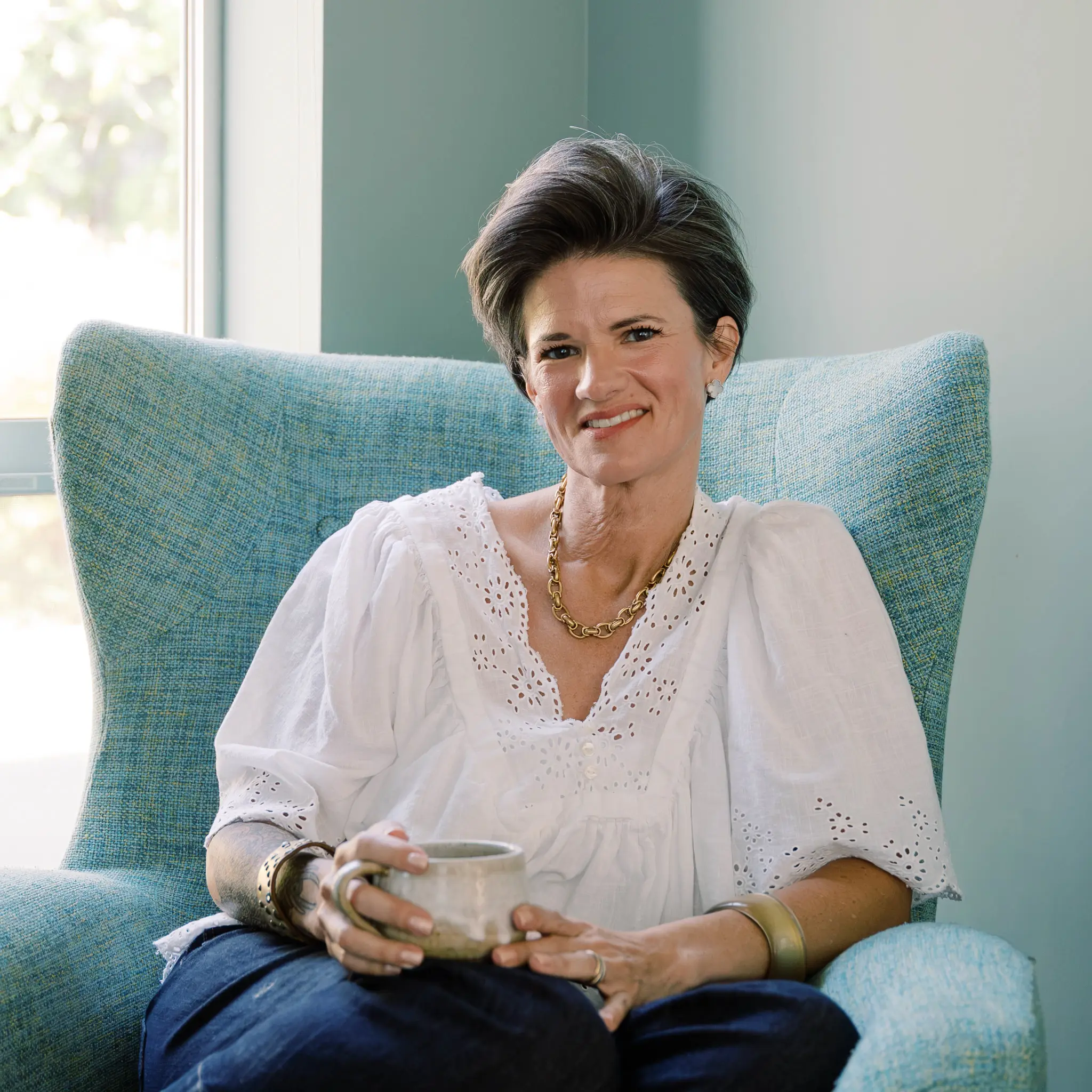
Yvette Brown, Marriage and Family Therapist Trainee at Attune Center for Healing. Supervised by Christina Whitney, LMFT #111050.
What happens in a Brainspotting session
-
We check in
We begin with conversation and consent. You set the pace.
-
We find a brainspot
Together we find a spot in your visual field that connects to the activation or the stuckness.
-
You look there, with support
I track your face, breath, and words. You can stop, slow down, or close your eyes at any time.
-
We come back to the room
We close by orienting to where you are, so you leave more settled than flooded.
Some people feel body sensation. Some people get images or a sudden sentence. Some people just get quieter. All of that counts. We pair Brainspotting with talk, and with IFS when a part is standing guard. If processing is too much that day, we resource and stop. Pacing is the method.
People often ask for Brainspotting when
- They have told the story and the body has not stood down
- Talk therapy keeps circling the same insight
- There is a startle, freeze, or shutdown that words do not touch
- They want trauma work without a highly structured protocol
What people often bring to it
- Medical trauma
- Accidents
- Relational shock
- Grief
- Years of bracing that never had words
What Brainspotting is not
- It is not hypnosis. You are not put into a trance, and you stay present.
- It is not EMDR, though both work with the visual system.
- It is not a shortcut around consent or stabilization. If you are in active crisis, we stabilize first.
Chosen by fit, not by promise
Brainspotting was developed by David Grand. It is a newer approach, and its research base is smaller than for some other trauma therapies. So I do not sell it as a cure. We use it when it fits what your system can hold, and we talk honestly about fit as we go.
Questions people ask
Do I keep my eyes on one point the whole hour?
No. We use focused gaze in portions of the session and return to conversation.
Do I have to tell the story?
No. Nothing is forced, and you do not have to tell a story or have a big emotional release.
Can this be done over video?
Yes, with a stable connection and a plan for what to do if you disconnect. Some clients prefer the Redding office.
How many sessions does it take?
There is no honest number. We review fit after several sessions rather than selling a package.
Is this EMDR?
No. I use Brainspotting and IFS, not EMDR. If you specifically want EMDR, I can help you think about referral options.
Keep exploring
Want to see how Brainspotting and Internal Family Systems fit together? Read the free guide.